Texas Supreme Court Rejects Pro-Life Case – Motion to Reconsider Filed
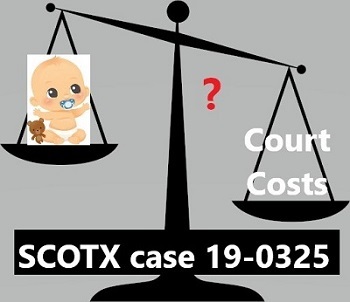 The Supreme Court of Texas declined to take up case 19-0325, but there is a pending motion to reconsider. The Supreme Court of Texas is filled with great people who I am certain would care about the issues involved in this case, but more likely than not, the Supreme Court of Texas simply didn’t directly get told in the filings that the issue at hand involved life and access to justice as the technical legal arguments do not outright say this, and the Court gets a lot of cases and cannot take up them all. That is why a motion to reconsider the case has been filed with the SCOTX and the motion to reconsider specifically points out the importance of this case and for unborn baby life and pregnant women and access to justice.
This case has some pretty strong implications about the rights of unborn baby life and medical expenses and access to justice. Effectively, the lower court and 9th Court of Appeals has determined that unborn baby and pregnant mother medical expenses are not necessary and must be paid after court costs in a case. This ruling was a huge strike against women and babies and access to justice in general. The SCOTX not taking up the case effectively approves of and allows to stay in place the lower rulings which have wide-reaching implications.
The text of the Motion to Reconsider is here below:
MOTION TO RECONSIDER PETITION FOR REVIEW
Unborn Baby Expenses should NOT come after court costs and this Supreme Court should NOT vote AGAINST life. Access to Justice is DENIED if lower courts can simply refuse to consider expenses before determining ability to afford court costs.
Comes now Appellant and request this Honorable Supreme Court of Texas to reconsider appellant’s Petition for Review.
I request this court to reconsider their decision not to take up a petition for review of the above referenced cause. On the face of the appeal, the issues might not seem important enough for this Supreme Court to take up, even with apparent flaws or issues of the underling orders. I understand there are a lot of cases and the SCOTX can only take up a small percentage of them, however, I would like to express to this court that the underlying issues are much more important than they appear at first glance.
First, A denial of the Supreme Court’s review of this case will be a major anti-life statement. The 9th Court of Appeals decided that medical expenses of an unborn baby and pregnant mother are NOT valid expenses that should be paid before having to pay court costs of an appeal. Specifically, I had filed motion of material change in financial circumstances in regards to paying the large amount of court costs of an appeal. The change in circumstance was due to my wife becoming pregnant and there being new and vital medical expenses for the life of my unborn son and the health of my pregnant wife. The 9th Court of Appeals denied this motion and then dismissed the appeal stating that there had been NO reasonable reason for not being able to pay court costs. The 9th Court of Appeals effectively and literally determined that the life and health of an unborn baby and pregnant mother are NOT worth of consideration, and NOT reasonable or necessary to pay before having to pay appeals court costs. Appeals court costs must come first before medical expenses for the life and health of a baby is the statement and decision made by the 9th Court of Appeals. If this Supreme Court of Texas refuses to take up this petition for review, then this court is effectively agreeing with and upholding the radically wrong anti-life decision by the 9th Court of Appeals. Clearly the issues of this case are not simply about a small court costs disagreement, but rather it is about a much bigger and more important issues which will send an anti-life message across Texas if not reviewed by this Honorable Supreme Court.
Second, a denial of the Supreme Court’s review of this case will be a major blow to Access to Justice (which this Court has pushed hard recently to reform to allow access), and it would send a statement to Texas that Supreme Court guidelines for determining ability to afford costs are irrelevant and allow for lower court to use different and contradictory and vague and unconstitutional guidelines to determine inability to pay for access to courts and therefore violates due process. Specifically, in this instant case, the lower court did not follow the set guidelines and rules regarding affidavits of inability to afford costs. The biggest flaw is that the lower court did not even consider any personal or business expenses or obligations before determining ability to afford costs. This completely contradicts the Texas Supreme Court having rewritten indigency rules to require examination of ability to afford, not just ability to pay. Income of any amount cannot alone be examined before determining ability to afford costs without having first having examined expenses to or other obligations to determine what portion of income is even available to use after necessary expenses to live. In this instant case, the lower court NEVER examined ANY expenses or obligations and therefore could never have determined my ability to afford costs at that time. The lower court did not even examine my personal bank account or current personal income. The lower court only examined the money of a small business corporation that I had an ownership interest in. The court saw a few thousand dollars in the company account at the end of each month and said hey I should just raid the company account and get that money to pay my personal court costs because I am able to access the company bank account. Had the trial court actually followed indigency and ability to afford guidelines, the trial court would have seen that any payments I had gotten from the company were a year before the indigency hearing and and had not been received in nearly a year and the company had no positive value to me and was a young company owned by financing and another business who financed the start of the company and therefore was not even a positive asset to add as current income or asset positive value on an ability to afford cost form. Me simply being able to access the company bank account does not mean that the company money is mine to take even if I had gotten payments previously when the company had the ability to pay. The other owner of the company actually has a court order from a different court which PROHIBITS me from taking company money, which he has a majority interest in and which are for paying company expenses, and using it for my personal court costs. I would actually be violating a court order if I did take company money for personal expenses. But even if the court did determine I could just raid the company account, The court was required to, but never examined any expenses or obligations because if it had it would have found that the little money left over in the business account was to pay for the next week payroll of the employees of the small business or the taxes every three months or the debt payment to the companies and financial institutions that effectively owned the company through financing agreements. The lower court and opposing attorney Scott Browne and 9th Court of Appeals would have me commit fraud or other serious crimes or unethical behavior by taking company money that belonged to employee pay or belonged to the customer who gave that money to the business to but them a new heater. Surely this honorable Supreme Court would not agree with me resorting to stealing from employee paychecks or committing fraud by taking money from the company account that is there to pay for a customer parts? And that is the massive issue with this case. The issue is that the lower court and even the appeals court have simply ignored the SCOTX guidelines for determining ability to afford costs. This lower court and the 9th Court of Appeals determination to ignore necessary expenses violates due process and the Constitution because true ability to afford costs to access the courts cannot be determined without having examined both income AND expenses. What is the point of this SCOTX creating ruled for examining ability to afford costs to allow for access to justice if the lower courts and the appeals court can simply ignore these guidelines and declare someone able to pay costs without having ever determined expenses and ability to actually use income. This is an issue that is widespread and greatly impacts other Texans and deprives many other people of the ability to access courts if there are no enforceable standards of determining indigency and examining expenses before making a determination about ability to afford costs. In fact, this Supreme Court of Texas has a different case, a habeas corpus case, before it right now involving a young father Joshua Jaros who was jailed without having a right to be represented by an attorney. That case before the SCOTX is cause 19-1101 and this court has yet to rule on that case. In that case, Joshua declared his inability to afford an attorney and the trial court denied him a court appointed attorney without having considered his expenses and ability to afford an attorney. The 9th Court of Appeals was again the appeals court in this case and the 9th Court of appeals declared that expenses and actual ability to afford costs don’t ever have to be considered. Interestingly though, the 9th Court of appeals, in their upholding that the trial court did not need to examine expenses for determining indigency for a court ordered attorney, specifically acknowledged caselaw regarding the need to examine expenses for ability to pay court costs. The 9th court of appeals has contradicted themselves by denying the need to examine expenses in my inability to afford court costs, while acknowledging in Joshua’s case that expenses do need to be considered for court costs and ability to afford them. Clearly there is a pattern of different people being denied due process and being denied constitutional rights due to Texas trial courts and specifically the 9th Court of appeals determining and upholding this flawed notion that it is ok to determine that someone can pay for court costs or for an attorney and can be denied these rights to access justice and rights to a court appointed attorney by simply declaring they can pay without ever having actually examined their ability to afford and without ever having considered expenses and obligations. The SCOTX must take up this issue and provide clarification and enforcement of guidelines for determining ability to afford and access to justice, instead of the lower courts and the appeals court having different and even contradictory guidelines to determine ability to afford which allows for ignoring expenses and violated due process.
Prayer
I pray that this honorable Supreme Court of Texas reconsider their denial to take up my petition for review of the above referenced case. I pray this court takes up my petition for review due to the important and far reaching issues and implications of the underlying case regarding life and access to justice and guidelines for inability to afford determinations

